
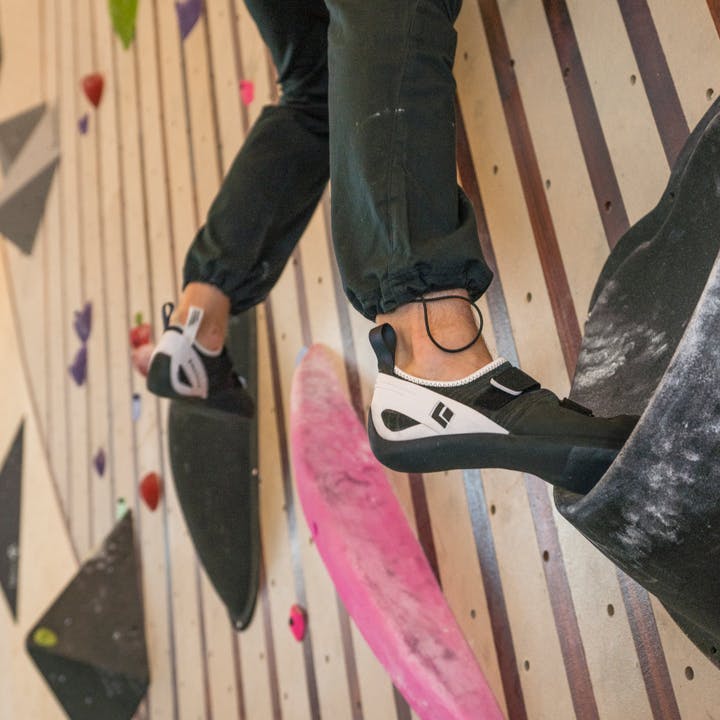
The 10 Best Bouldering Shoes to Help Send Your Next Project
Bouldering is the purest form of rock climbing. And the most accessible. You’re not burdened with ropes, harnesses, or quickdraws. Routes are short, intense, and powerful. And all you need is a pair of shoes and a chalk bag (a working understanding of key climbing lingo helps, too).
But bouldering at your limit means no room for error. Each foot placement, toe smear, and heel hook must be perfectly placed. The tiniest release of tension or foot misplacement could mean the difference between sending your dream project—that's bouldering speak for a specific route—or laying flat out on the crash pads. The right pair of rock climbing shoes can determine whether you succeed or fail; after all, shoes are 50% of your contact with the rock.
Fingers of steel go a long way, but footwork becomes a limiting factor at some point. Enter: the bouldering shoe.
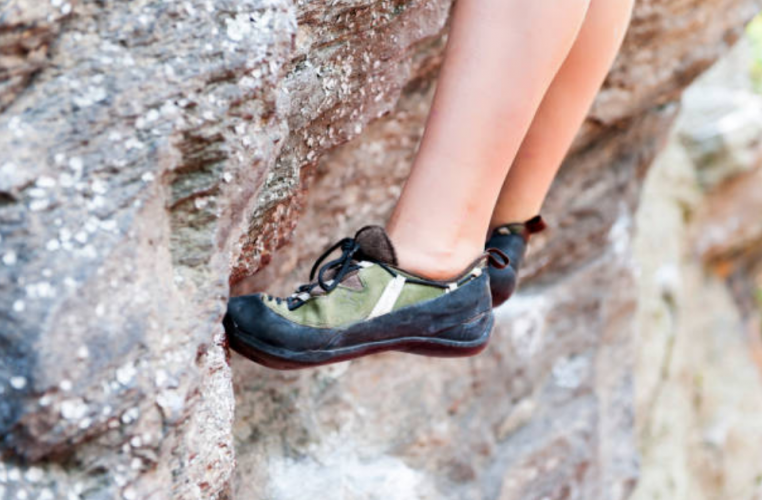
What to Look for in Bouldering Shoes
Sorting through the masses of climbing shoes to find the perfect bouldering shoe is not an easy task. Differences in stiffness and shape significantly impact how a rock climbing shoe performs on different angles and types of rocks. Knowing the attributes that make one shoe more suitable for a particular kind of climbing versus another is essential. Here’s what you need to know.
Stiffness
The most crucial factor to consider when buying a climbing shoe is undoubtedly the stiffness. How soft or stiff a rock climbing is affects how the shoe will stick to the rock.
For example, super soft shoes conform to the shape of the rock, allowing for more rubber to touch the rock, which is perfect for volumes, smears, and toe hooks. On the other hand, a soft shoe will collapse if you’re trying to edge. Stiffer climbing shoes are better at edging because they have some structure your foot can stand on, which makes them better for edging and climbing cracks. A simple way to measure the stiffness of a climbing shoe is to determine if it easily folds over on itself. Soft shoes will bend like a burrito, stiff shoes won’t.
Shape
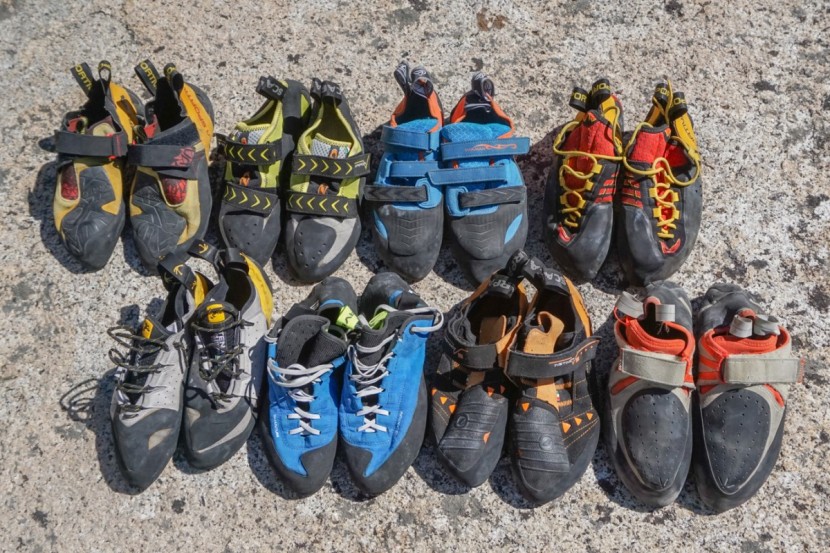
Climbing shoe shapes vary to perform better on specific types of terrain such as steep, vertical, or slab climbing. The four most common shapes are aggressive downturned, slightly or moderate downturned, flat, and asymmetrical.